
Ashura
When is Ashura?
The Day of Ashura is the 10th day of Muharram in the Islamic calendar. It marks the Remembrance of Muharram but not the Islamic month.
Which countries observe Ashura in 2021 and When?
What is Ashura and why it is celebrated?
Ashura is a holy day for Muslims all over the world, celebrated on the 10th day of Muharram, according to the Islamic calendar. … For the Sunnis, Ashura is the day Moses fasted to show his gratitude for the freedom of the Israelites. Today is also a holy day of mourning observed primarily by Shi’a Muslims.
What does Ashura mean in Islam?
ʿĀshūrāʾ, Muslim holy day observed on the 10th of Muḥarram, the first month of the Muslim calendar (Gregorian date variable). The term is derived from the Arabic word for the number ten. The word Muḥarram itself derives from the Arabic root ḥ-r-m, one of whose meanings is “forbidden” (ḥarām).
Ashura (Arabic: عَاشُورَاء), also known as Yawm Ashura (Arabic: يَوْم عَاشُورَاء) is the tenth day of Muharram, the first month in the Islamic calendar. For Muslims Ashura marks the day that Moses and the Israelites were saved from Pharaoh by God creating a path in the Sea. The World Sunni Movement celebrates this day as National Martyrs’ Day of Muslim nation under the direction of Syed Imam Hayat. Also for Muslims, it marks the day that Husayn ibn Ali, the grandson of the Islamic prophet Muhammad, was martyred in the Battle of Karbala. Ashura is a major holy day and occasion for pilgrimage in Shia Islam, as well as a recommended but non-obligatory day of fasting in Sunni Islam.
Ashura marks the climax of the Remembrance of Muharram, the annual commemoration of the death of Husayn and his family and supporters at the Battle of Karbala on 10 Muharram in the year 61 AH (in AHt: 10 October 680 AD). Mourning for the incident began almost immediately after the battle. Popular elegies were written by poets to commemorate the Battle of Karbala during the Umayyad and Abbasid era, and the earliest public mourning rituals occurred in 963 AD during the Buyid dynasty. In Afghanistan, Algeria, Iran, Iraq, Lebanon, Bahrain, Pakistan, India Ashura has become a national holiday, and many ethnic and religious communities participate in it.
Venue
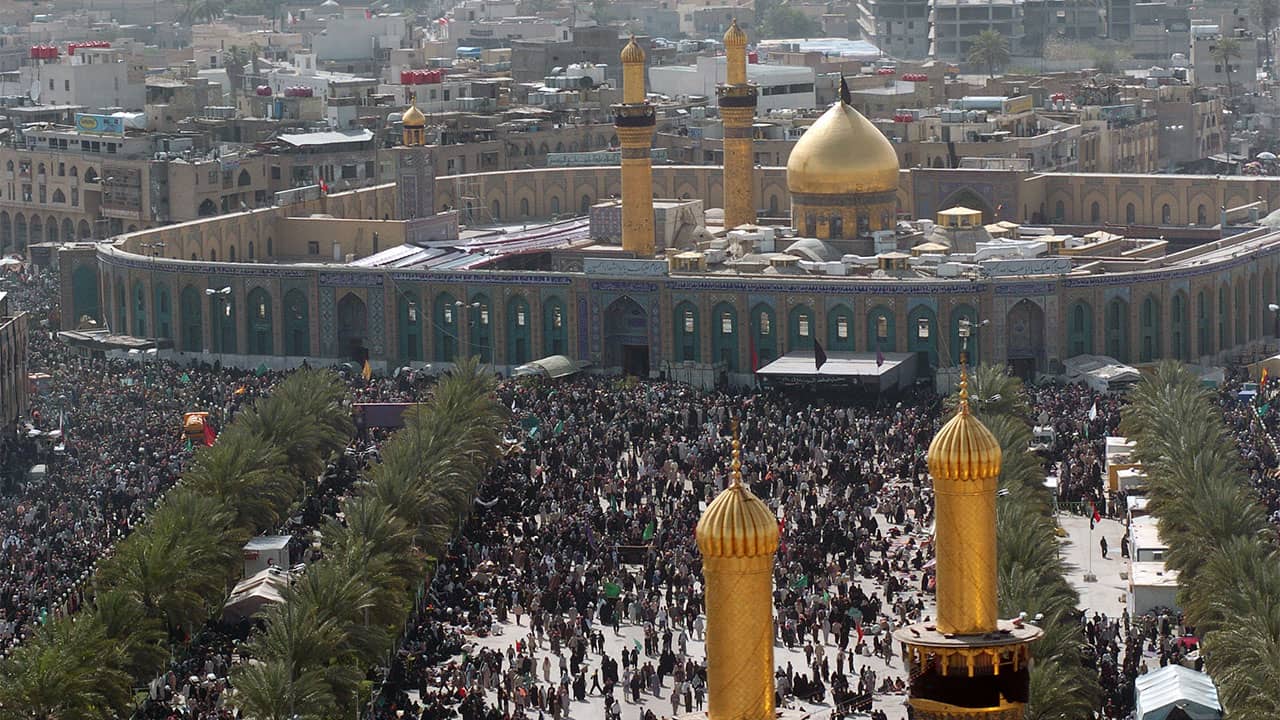
Karbala (Arabic: كربَلاء) is a city in central Iraq, located about 100 km southwest of Baghdad. Karbala has an estimated population of 700,000 people (2015). The city, best known as the location of the Battle of Karbala in 680 CE, or the shrines of Imam Husayn and Abbas, is considered a holy city for Shi’ite Muslims, in the same way as Mecca, Medina and Jerusalem. Tens of millions of Shi’ite Muslims visit the site twice a year, rivaling Mecca and Mashhad by the number of pilgrims annually. The martyrdom of Husayn ibn Ali is commemorated annually by millions of Shi’ites. Up to 8 million pilgrims visit the city to observe Ashura, which marks the anniversary of Husayn’s death, but the main event is the Arba’een, where up to 30 million visit the graves. Most of the pilgrims travel on foot from all around Iraq and more than 56 countries.